
Pirojsha Godrej, 43, patriarch Adi Godrej's son, is set to take over as chairman of the Godrej Industries Group from 2026 whol Nyrika Holkar, Smita Godrej Crishna's 42-year-old daughter, has emerged as the face of the Godrej Enterprises Group.

The Adi/Nadir Godrej family, along with other family members/trusts, has made an open offer to the shareholders of Astec Lifesciences to acquire an additional 26 per cent stake from the public as part of the family settlement agreement (FSA), according to an announcement to the stock exchanges on Wednesday. The offer, made at the price of Rs 1,069.75 per share, was triggered by the Adi/Nadir family's plan to acquire a 20.84 per cent stake in Godrej Industries (GIL) from the Jamshyd Godrej/Smita Crishna Godrej family, according to the FSA announced on Tuesday.

Semiconductor makers need thousands of engineers and technicians, and though India has one of the largest pool of engineers in the world, they do not have experience in the semiconductor manufacturing space.

'Companies like Tesla and others have been given a long rope in India.'
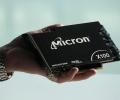
Micron Technology, a global leader in memory and storage, is considering supplying Made-in-India chips from its Gujarat plant to one of its key global clients, Apple, whose vendors assemble iPhones in the country. Micron is setting up an assembly test marking and packaging (ATMP) plant in Sanand, Gujarat. Currently, Apple vendors import chips for manufacturing iPhones. Sources in the know say the aim is to use part of the production to supply to Micron's clients in India directly.

Private credit is fast emerging as a major source of finance for projects in India as several entrepreneurs are looking for short-term debt to bridge the funding gap due to difference in pricing for equity dilution, top officials at PwC India said. They said while new private equity (PE) investments during the past two years have declined, several public market exits by PEs were observed during that period. Several companies are likely to approach capital markets in the near future to provide liquidity to PE fund investors.

The merger and acquisition (M&As) transactions have picked up pace in the March quarter of 2024 with 455 deals amounting to $25.6 billion deal value announced. This is a 24 per cent rise in deal volume as compared to Q4CY23, according to PwC India report. This signals a shift from the declining trend observed in 2023, as per PwC India's report Deals at a glance.

Tesla's plan to manufacture its affordable electric car priced at $25,000 in India and Mexico could materialise sometime in 2025 or thereafter, with Elon Musk declaring that these models would be produced at its existing factories to utilise their full capacity before investing in new manufacturing lines. The company operates factories in Texas and Fremont in the US, Berlin in Germany, and Shanghai in China. By the end of the calendar year 2023, Tesla was manufacturing 1.8 million vehicles annually.

Anil Agarwal-owned Vedanta Resources (VRL), which has hired Standard Chartered Bank to raise funds for its Konkola copper mine assets, says it is engaging with several potential partners for both short-term funds and long-term equity financing for the Zambian project. A Vedanta official said its commitment to optimising capital allocation and driving expansion is a key cornerstone of its strategy for the mines. It will enhance value creation and operationalise the Konkola Copper Mines (KCM).

India is far behind global competitors such as Vietnam, Taiwan, and Mexico in increasing electronics exports to the US by making the most of Washington's tariff action against China. In 2018, the US imposed a 25 per cent punitive duty on a range of Chinese electronics items. The trade duties led to a sharp fall in Chinese electronics exports to the US from $207 billion in 2018 to $140.2 billion in 2019, down 32 per cent, according to Indian Cellular and Electronics Association (ICEA) data, which has been analysed by ITC Trade Map.

For the smart phone industry, it has been a lacklustre quarter of CY2024, with sales falling by 3-4 per cent over the same period last year, according to Counterpoint Research projections. However, with the launch of many new models in Q1 of CY24, overall shipments grew year-on-year by 10-12 per cent. In CY23 shipments remained flat, ending the year with 152 million units.

Led by Ola Electric, which registered an industry record of 53,186 vehicles in March, electric two-wheeler (e2W) penetration hit a record at 8.91 per cent - the highest ever for a month (based on Vahan data).

Despite all the noise around India's chance to leverage the China-plus one strategy, India's share of global foreign direct investment (FDI) inflows fell from 3.5 per cent in the first nine months of 2022 to 2.19 per cent in the same period in 2023, according to OECD data. The sharp drop of 54 per cent is much steeper than the overall global FDI inflow decline of 26 per cent in the first nine months. FDI inflows to China have fallen dramatically from a share of 12.5 per cent in the first nine months of 2022 to only 1.7 per cent in the same period in 2023.

If Tesla comes in, India's position as a manufacturing hub will rise many notches, as it will become only the second country, after China, to have both Apple as well as Tesla.

Private equity (PE) investments in India have fallen to a 6-year low at $24.2 billion in the financial year ending March 2024. Investments via PE deals are down 47 per cent compared to FY23, when private equity deals worth $45.8 billion were signed. According to data sourced from Bloomberg, PE firms had signed record deals worth $80 billion in the financial year ending March 2022.
Mergers and acquisitions (M&As) in India have moved into the slow lane, dropping 43 per cent in terms of deal value to touch $13.37 billion since January this year to date, compared to the same period in the last year. According to data sourced from Bloomberg, Indian companies reported deal value worth $23.5 billion between January and March 22, 2023. Data Infrastructure Trust's acquisition of American Tower Corporation's India telecom towers business for $2.5 billion was the top deal for the ongoing quarter so far, followed by the Highway Infrastructure Trust's acquisition of PNC Infratech's road projects for $1.08 billion.

The global billionaires list witnessed as many as 94 new entrants from India, stated a report by Hurun India on Tuesday. Following a net addition of 84, the country's billionaire tally touched 271 with their combined wealth at $1 trillion, noted the report. Mukesh Ambani, chairman & managing director of Reliance Industries, is the only Indian to make it into the top 10 of the Hurun Global Rich List 2024, a ranking of billionaires in US dollar terms.

After a tentative start, quick commerce (q-commerce) is ablaze, with Blinkit and Zepto slugging it out in a market distinct from other competitors. The latest entrant is Flipkart, which is ramping up its infrastructure in around 12 cities where it will launch the service in the next six to eight weeks, taking on existing players such as Blinkit, Zepto, Instamart, and BigBasket, among others. According to data analysed from Sensor Tower by BofA Global Research, the daily active user (DAU) base of Blinkit has grown by 58 per cent between February 2023 and February 2024.

Apprentices get at an average of Rs 10,000 to Rs 12,000 per month which can double after one year of on-the-job training.
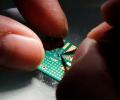
The exclusive club that dominates the global semiconductor fab scenario is about to get a new member. Taiwan, South Korea, and China control nearly 70 per cent of the global capacity. SEMI, the global industry body for semiconductor and electronics design and manufacturing, projects all fabs collectively will churn out 30 million wafers a month this year.
